Exploring how Pearson could help students train focus, just like any other skill.
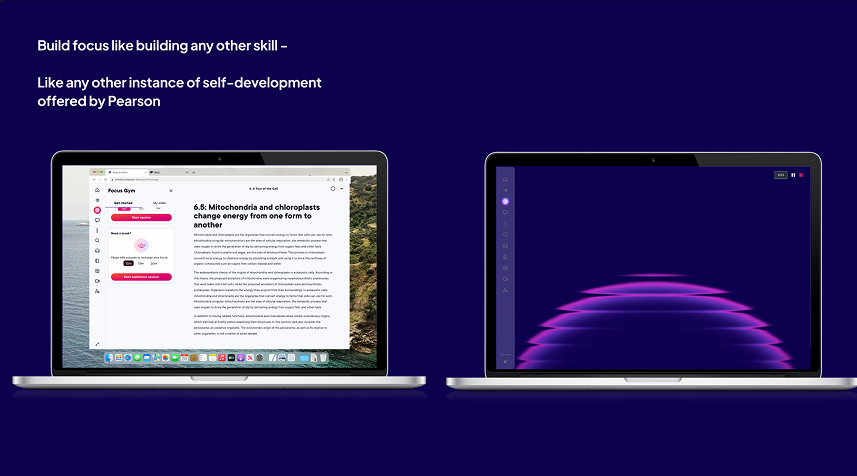
Focus Gym is a gamified concept that helps students build sustained concentration through progressive training, designed as a new feature inside Pearson's existing eText reader, alongside tools like Study Tools, Notebook, and Audiobook. And rather than fighting the urge to break focus, it redirects it: when attention slips, a guided meditation replaces the phone unlock. I designed and prototyped it in two days during a Pearson design hackathon, using an AI-accelerated process to get from idea to working prototype fast.
-
01
Won Best Solution Showing User Impact
A senior cross-functional panel recognized Focus Gym for addressing a real student need through an intuitive, motivating experience.
-
02
Reframed focus as a trainable skill
Translated an abstract cognitive challenge, sustaining attention, into a concrete feature that fits inside Pearson's existing eText reader, redirecting broken focus into a guided meditation rather than a phone unlock.
-
03
Used AI as a design accelerator, not a crutch
Showed how AI can responsibly speed up research, ideation, prototyping, and storytelling, without replacing design judgment.
-
04
Owned a concept end-to-end under tight constraints
Carried the idea solo from problem framing to a working prototype and an AI-generated demo video, all within two days.
The brief was open-ended: explore a practical application of AI for Pearson learners. I chose to tackle focus, a challenge many students face but few products address directly. Rather than another tool that tracks or blocks distractions, I asked what it would look like to train focus the way you'd train any skill, with AI shaping each session around the individual.
Over two days I took the idea from problem framing to a working prototype and a sizzle reel for final judging.
I participated in the AI Training & Hackathon for Pearson Designers, an event combining AI training, hands-on prototyping, and a judged demo day. The goal was to rapidly design and prototype a new user experience using AI tools to accelerate research, ideation, and execution.
Participants delivered:
- A functional prototype
- Testing insights
- A 2-minute AI-generated demo video (“sizzle reel”)
Students often struggle to sustain focus over time, especially in self-directed digital learning environments. While productivity tools exist, many treat focus as a static state rather than a skill that can be trained and improved.
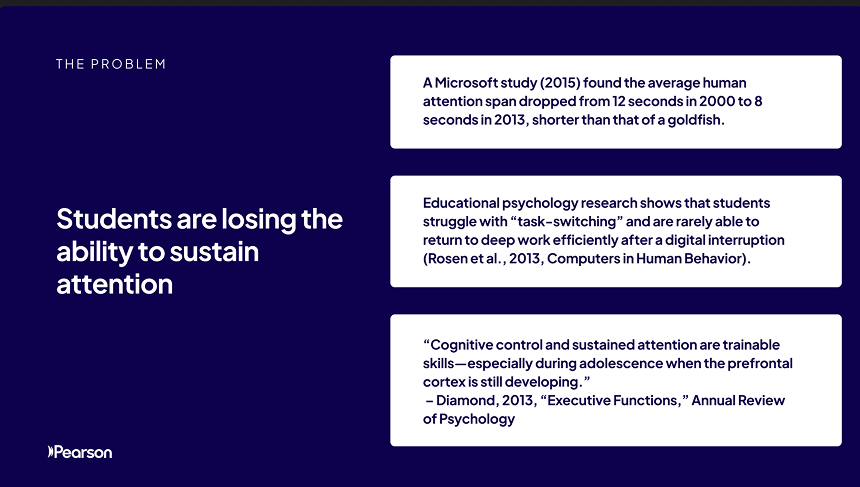
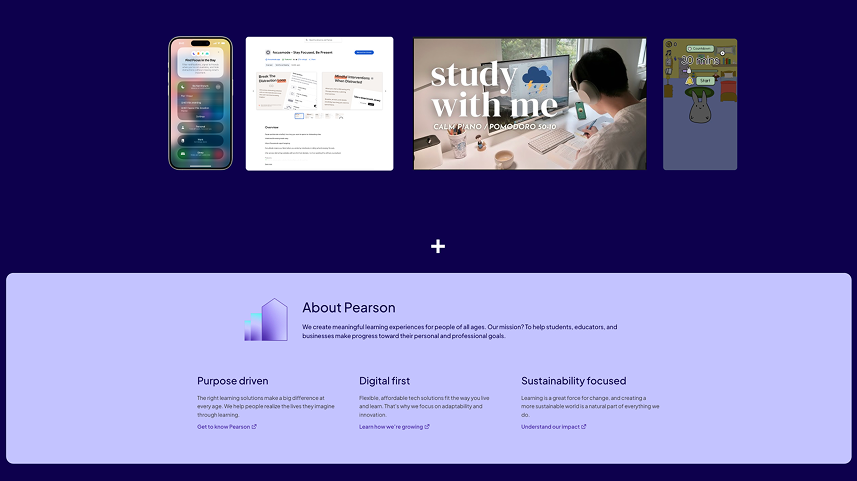
So I treated focus as trainable, something a student strengthens over time rather than a trait they either have or don't, and designed Focus Gym to live where students already study: as a new feature in Pearson's eText reader toolbar, next to Study Tools, Notebook, and Audiobook.
Here's how I framed the pitch, from the opportunity through to where the feature would live and how it would work.
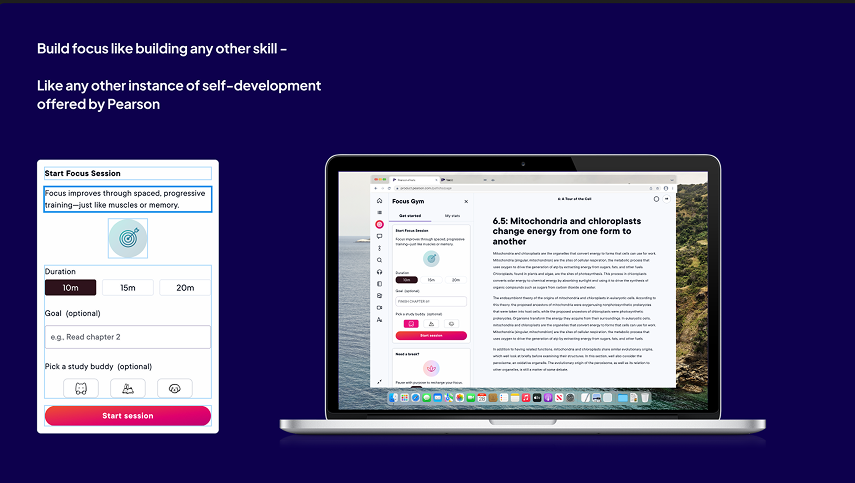
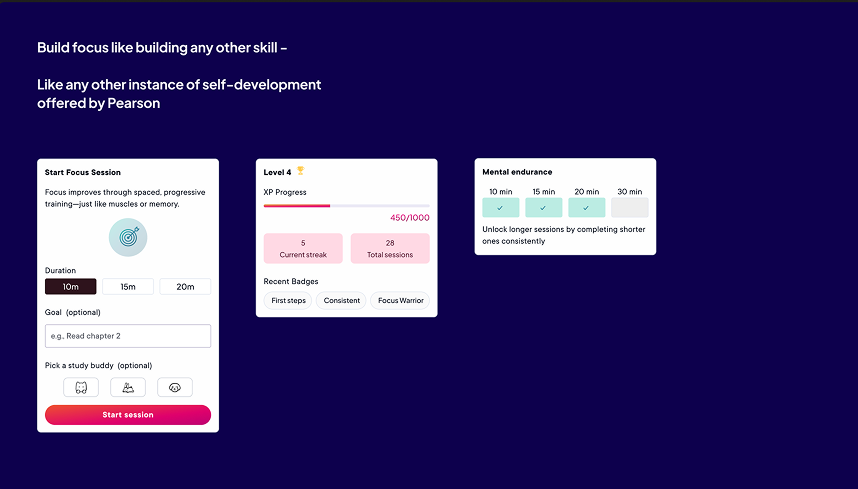
- Progressive training: sessions designed to gradually increase duration and cognitive demand.
- Gamified structure: levels, advancement, and visible progress to reinforce motivation.
- AI-supported build: AI tools accelerated ideation, prototyping, and presentation, aligning with the hackathon's goals.
- Student-centered framing: focus treated as a learnable skill, not a fixed trait.
- End-to-end concept design (solo submission)
- UX framing and interaction model
- Rapid prototyping using AI-assisted tools
- Creation of an AI-generated demo video for final judging
- Translating abstract cognitive challenges into clear, user-centered product concepts.
- Strong UX judgment under tight time and tooling constraints.
- Fluency in using AI as a design accelerator, not a replacement for thinking.
- Comfort owning a concept end-to-end, from problem framing to storytelling.
Given two days, I shipped streaks and badges as a visible progress layer, they're legible fast, which mattered for a hackathon demo. But the mechanic I actually cared about testing was "pause with purpose": when a student's focus breaks, Focus Gym doesn't fight that impulse, it redirects it, a guided meditation instead of a phone unlock, so the break itself becomes part of the recovery, not a relapse.
If I rebuilt this outside a hackathon constraint, the streaks would be the first thing I'd reconsider, they're the easy answer, and the meditation redirect was my attempt at the harder one.